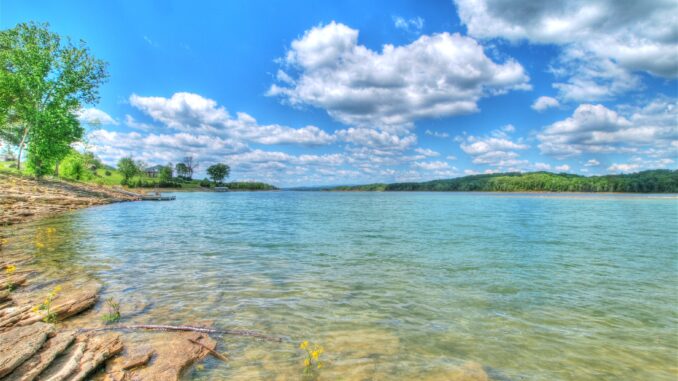
Ever wondered what makes Norris Lake have crystal clear waters?
One of the first things people notice about Norris Lake is the water. It is not unusual to look over the side of a boat and see 15 to 20 feet below the surface on a calm day. Compared to many lakes across Tennessee, Norris Lake has a level of clarity that surprises many first time visitors.
So what makes Norris Lake so different?
The answer comes down to a combination of natural geography, protected shorelines, and careful environmental management.
The Limestone Effect
Norris Lake sits in a region rich in limestone bedrock. As rainwater filters through the surrounding hills and rock formations, the limestone acts as a natural filtration system. Many impurities and particles are removed before the water ever reaches the lake.
This natural filtering process plays a major role in giving Norris Lake its clean, blue green appearance.
Deep Water Creates Clearer Surface Conditions
Another important factor is depth. In some areas, Norris Lake reaches depths of more than 200 feet.
Because the lake is so deep, sediment and heavier particles naturally settle far below the surface instead of remaining suspended in the water. The result is noticeably clearer water in the upper layers where boaters, swimmers, and anglers spend most of their time.
Forests Help Protect Water Quality
Unlike watersheds heavily impacted by agriculture or urban development, much of Norris Lake is surrounded by forest.
These wooded shorelines do more than create beautiful scenery. Trees and vegetation help slow rainfall runoff and naturally filter sediment before it enters the lake.
This natural buffer system helps keep the water remarkably clean throughout the year.
Limited Agricultural Runoff
Large scale farming operations can contribute fertilizer, soil, and nutrient runoff into nearby lakes and rivers. Norris Lake benefits from having relatively little agricultural activity surrounding much of the watershed.
With fewer nutrients washing into the lake after storms, there is less opportunity for murky water or excessive algae growth.
TVA’s Role in Preserving the Lake
The Tennessee Valley Authority, commonly known as TVA, also plays an important role in protecting Norris Lake’s water quality.
Shoreline development is carefully managed, and projects must meet environmental guidelines designed to minimize erosion and reduce environmental impact. These protections help preserve the lake’s natural beauty while preventing excessive sediment from entering the water.
A Constantly Moving System
Norris Lake is also part of a continuous flow through reservoir system. Water is constantly moving through the lake instead of remaining stagnant.
This circulation helps maintain oxygen levels, limits algae buildup, and contributes to the lake’s overall clarity.
A Perfect Combination
The crystal clear water of Norris Lake is not the result of just one thing. It is the combination of limestone geology, deep water, forested shorelines, limited runoff, and responsible management all working together.
So the next time you are out on Norris Lake and can see fish swimming below the boat or your feet dangling off the dock, you will know there is much more behind that incredible clarity than meets the eye.